Battery banks and electrical systems
LiFePO4 banks at 12V or 24V, with the fusing, busbars, crimps and cable that make a system safe, and monitoring you will actually use.
The system everything else plugs into
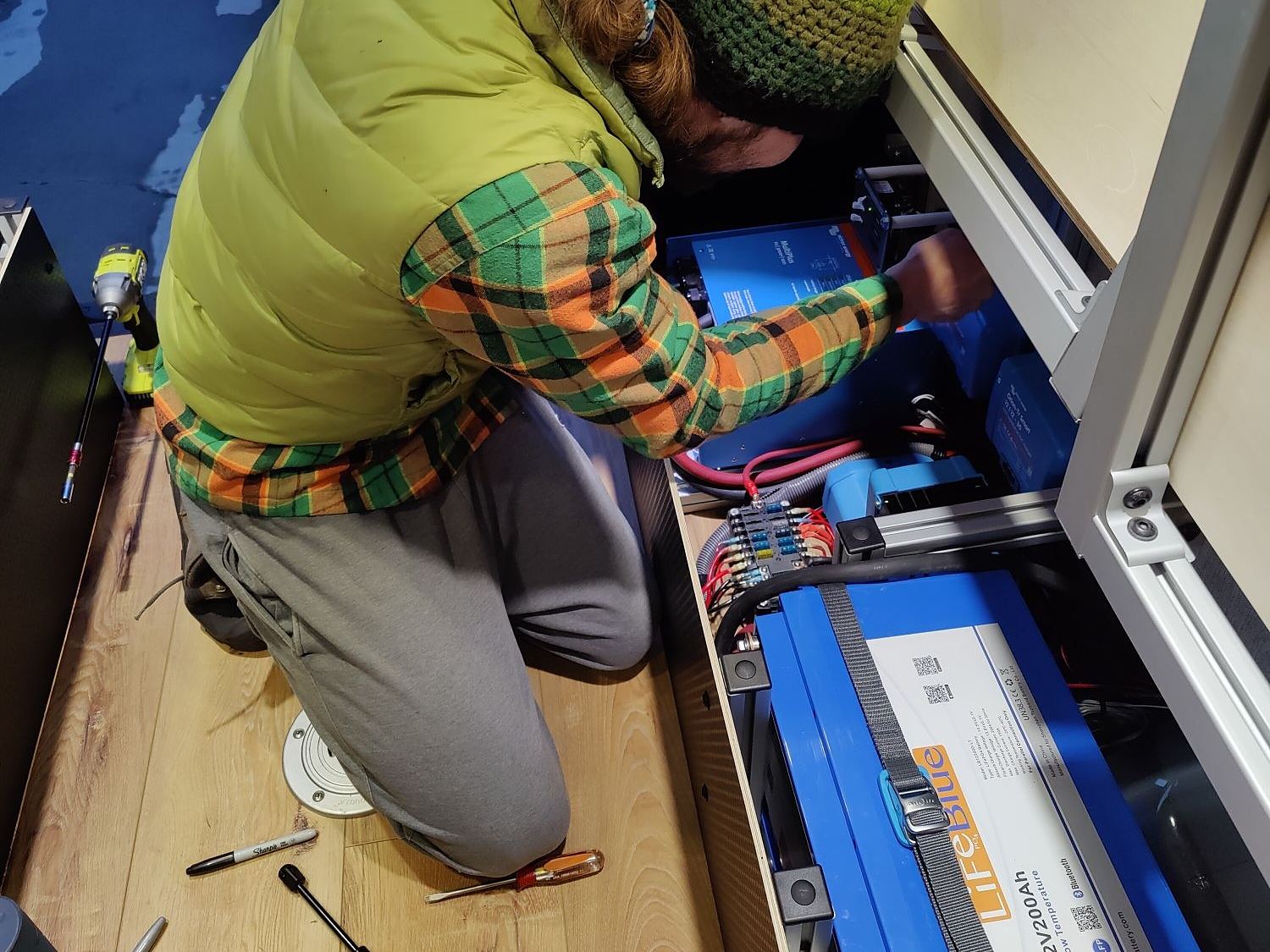
A good power system disappears. You open the app, see where the battery is, and stop thinking about it. That starts with the battery bank, and with everything between it and your loads: a Class T main fuse at the battery, Blue Sea Systems busbars and fuse blocks, a fuse for every source and load, cable sized for the current and the run length, and hydraulic crimps on every lug.
Most vans are 12V. Bigger systems with induction cooking, air conditioning or a large inverter often go to 24V, which halves the current for the same power. A 24V system runs the bank, the alternator and the inverter at 24V, and a DC-DC step-down feeds a separate 12V fuse block for the van's 12V loads.
An optional Victron Cerbo GX ties the system together as a main controller: one screen for every source and load, remote monitoring through VRM, and, with a battery that talks CAN, chargers that follow the battery's own limits.
A 12V system. The battery feeds a Class T fuse and a positive busbar, every source and load gets its own fuse, the shunt measures everything on the negative side, and an optional Cerbo GX ties it together.
- 1LiFePO4 bank built-in BMS, Bluetooth, low-temp cutoff or self-heating
- 2Class T main fuse sized to the bank, as close to the battery as possible
- 3Busbars every source and load lands here
- 4Branch fuses one per source and load, sized to the cable
- 5Shunt true state of charge
- 6Inverter-charger 120V out, shore charging in
- 7Shore inlet on the outside of the van
- 8Cerbo GX optional system controller and remote monitoring
A 24V system. The house bank, alternator charging and inverter all run at 24V, and a DC-DC step-down feeds a separate 12V fuse block for the van's 12V loads.
- 1LiFePO4 24V bank half the current of 12V for the same power
- 224V second alternator Wakespeed regulated, charges the house bank only
- 324V inverter-charger big AC loads and induction on thinner cable
- 4DC-DC step-down Victron Orion 24/12, feeds the 12V side
- 512V loads fans, lights, water pump, fridge
- 6Class T main fuse
- 7Cerbo GX optional
Battery features to choose between
| Feature | What it does | When it matters |
|---|---|---|
| Built-in BMS | Protects every cell from over-charge, over-discharge and short circuit, and balances the cells. | Every battery we install has one, or uses Victron's Lynx Smart BMS. |
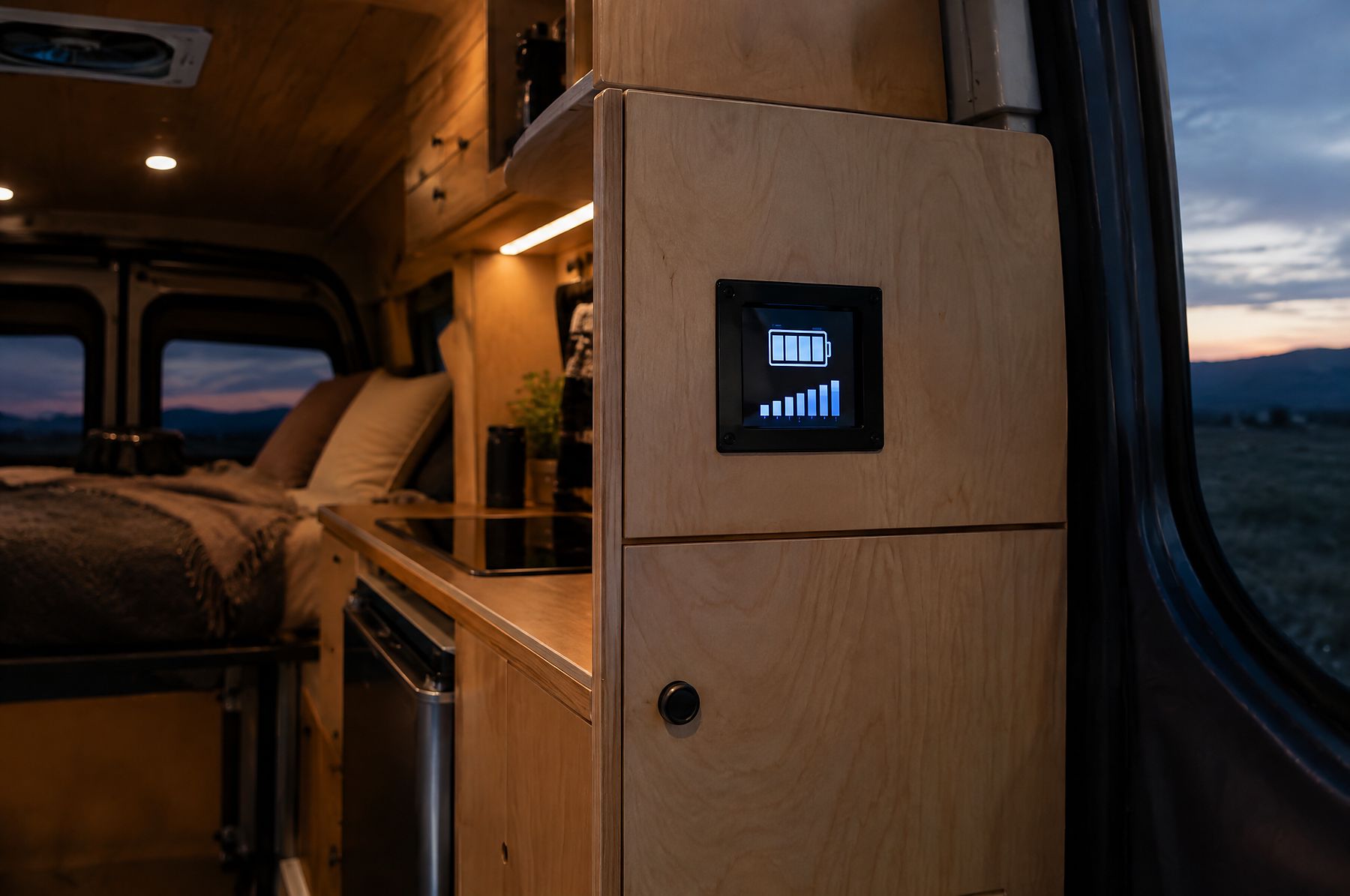
| Bluetooth | State of charge, cell voltages and temperature on your phone. | Handy on any battery. A shunt or Cerbo GX gives the full-system picture. |
| Low-temperature cutoff | Blocks charging below about freezing so the cells are not damaged. | Standard on LiFePO4. Fine if the bank lives in the heated cabin. |
| Self-heating | Warms the cells before charging when it is cold. | Ski trips and winter camping, where you want to charge after a cold night. |
| CAN communication | The battery tells every Victron charger its limits (DVCC). | Large or four-season systems built around a Cerbo GX. |
Brands we install include Battle Born, LiFeBlue, LiTime, SunGold Power, Renogy, Epoch and Victron. We match the battery to your system and budget.
Energy budget: what uses power, what makes it
Common loads
| Load | Typical draw | Typical use | Per day |
|---|---|---|---|
| 12V compressor fridge | Cycles, about 15 to 25 W average | 24 hrs | 300 to 600 Wh |
| Roof fan (MaxxFan Deluxe) | About 1 W low, about 35 W high | 8 hrs, mixed speeds | 50 to 200 Wh |
| LED lighting | 10 to 20 W | 4 hrs | 40 to 80 Wh |
| Phones and tablets | 5 to 20 W while charging | 2 to 4 hrs | 20 to 60 Wh |
| Laptop | 40 to 80 W | 4 to 8 hrs | 200 to 500 Wh |
| Starlink Mini | About 25 to 40 W | 8 hrs | 200 to 320 Wh |
| Diesel or gasoline air heater | 10 to 40 W running, more at start | 8 hrs overnight | 100 to 250 Wh |
| Water pump | About 50 to 70 W | 10 to 15 min | 10 to 20 Wh |
| Inverter left on (idle) | About 10 to 15 W | 24 hrs | 250 to 360 Wh |
| Induction cooktop | 1,200 to 1,800 W | 30 to 45 min | 600 to 1,300 Wh |
| Air conditioner (DC unit) | About 250 to 800 W | 4 to 8 hrs | 1,000 to 6,000 Wh |
Charging sources
| Source | Input power | Energy in |
|---|---|---|
| Solar, per 100 W of rigid panel, flat | Up to about 70 to 80 W in full sun | About 300 to 400 Wh/day summer, 100 to 150 Wh/day winter |
| Victron Orion XS DC-DC (one) | Up to 50 A, about 700 W | About 700 Wh per hour of driving |
| Orion XS DC-DC (two in parallel) | About 100 A, about 1,400 W | About 1.4 kWh per hour of driving |
| Secondary alternator, 12V | Often 150 to 200 A real at 12V | About 2 to 2.5 kWh per hour of driving |
| Secondary alternator, 24V | Kits around 150 A, about 3.6 kW | About 3 to 3.5 kWh per hour of driving |
| Secondary alternator, 48V | Kits around 100 A, about 5 kW | About 4 to 5 kWh per hour of driving |
| Shore power via MultiPlus-II 12/3000 | Charger up to 120 A, about 1.6 kW | About 1.5 kWh per hour plugged in (pedestal permitting) |
Putting it together
| Profile | Runs | Uses | Typical system |
|---|---|---|---|
| Weekend camper | Fridge, fan, lights, phones, heater at night | About 0.6 to 1.2 kWh/day | 200 to 300Ah at 12V, 200 to 400 W solar, Orion XS |
| Remote worker | Above plus laptop and Starlink Mini all day | About 1.2 to 2.2 kWh/day | 300 to 460Ah at 12V, 400 to 600 W solar, Orion XS or second alternator |
| All-electric | Above plus induction cooking and AC | About 3 to 8 kWh/day | 24V or 48V bank, secondary alternator, all the solar the roof holds |
Typical figures for planning. Real numbers depend on the exact model, outside temperature, insulation, how you use the van, and alternator RPM and heat. We size your system from your own load list.
How we do it
Load audit
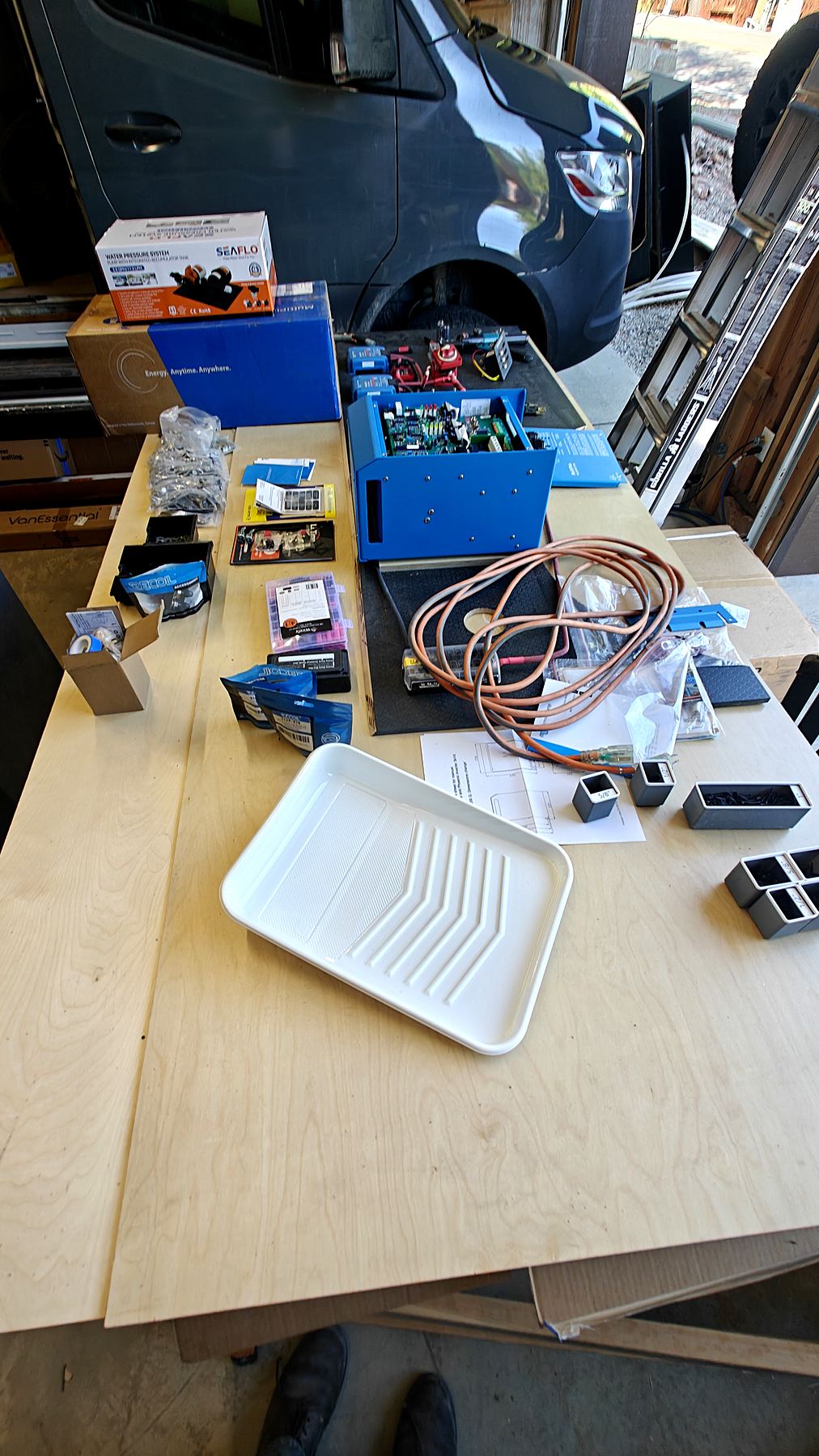
Fridge, fans, lights, induction, AC: we list what you run and size the bank, voltage and charging to match.
Mount the bank
Batteries secured inside the heated cabin, with a Class T main fuse and a disconnect.
Distribution
Busbars, fuse blocks and a fuse for every circuit, with cable sized for current and length and hydraulic crimps on every lug.
Monitoring
Shunt, Bluetooth and an optional Cerbo GX wired in, and DVCC enabled when the battery supports it.
Commission
Charge profiles and low-temperature limits set, tested under load, then we walk you through the app.
What to know before you buy
Cold charging in Utah
Every LiFePO4 BMS blocks charging below about freezing. Self-heating batteries, or a bank inside the heated cabin, let you charge after a cold night.
12 or 24 volt
12V suits most vans. Bigger inverters, induction cooking and AC run cooler and on thinner cable at 24V.
Crimps and cable
Most electrical failures we fix are bad crimps or undersized cable. We size every run and crimp hydraulically.
Room to grow
We leave capacity and space for the solar, alternator or AC upgrades you are likely to want next.
Questions about battery banks
Can my batteries charge when it is freezing?
Unheated LiFePO4 cannot. The BMS blocks charging below about 32°F. Self-heating batteries, or a bank inside the heated cabin, solve it.
Do I need a Cerbo GX?
No. Bluetooth on the battery or shunt covers most vans. A Cerbo GX is worth it for bigger Victron systems, CAN batteries and remote monitoring.
Should I go 24V?
If you plan on air conditioning, daily induction cooking or an inverter over about 3000W, 24V is usually the better system.
Can I check my system remotely?
Yes. A Cerbo GX with Wi-Fi or a cellular router reports to Victron's VRM portal and app from anywhere.
Get a power system quote
Send a few details and we will call you back with ideas, options and a ballpark.
- 6771 Emigration Canyon Rd, Salt Lake City
Office visits by appointment - 5.0 on Google from 39 reviews
Read what owners say