Subfloor and flooring
Plywood subfloors fastened to factory points, finished in marine vinyl (our recommendation) or LVP, with L-track set flush where you need tie-downs.
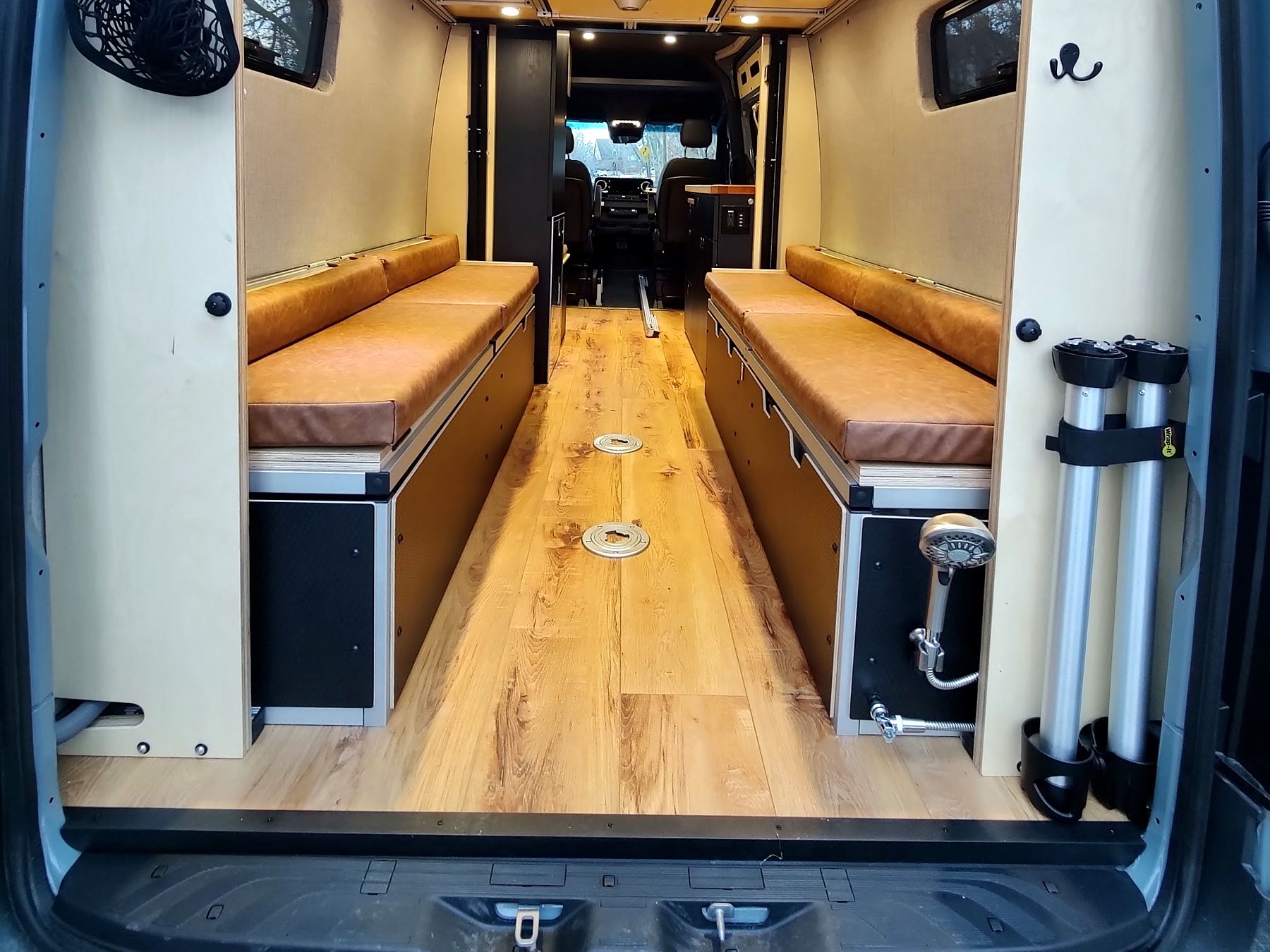
The base everything bolts to
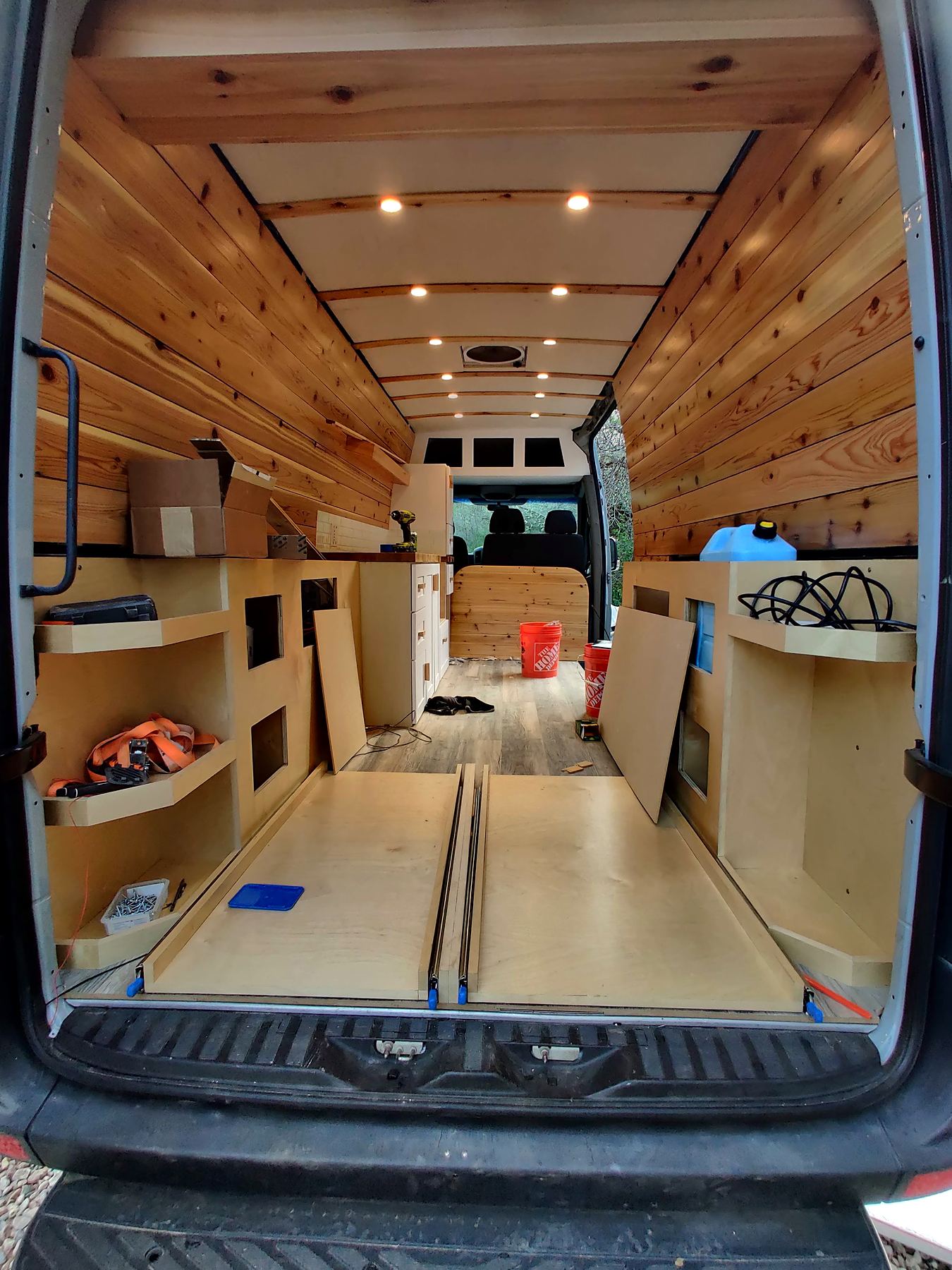
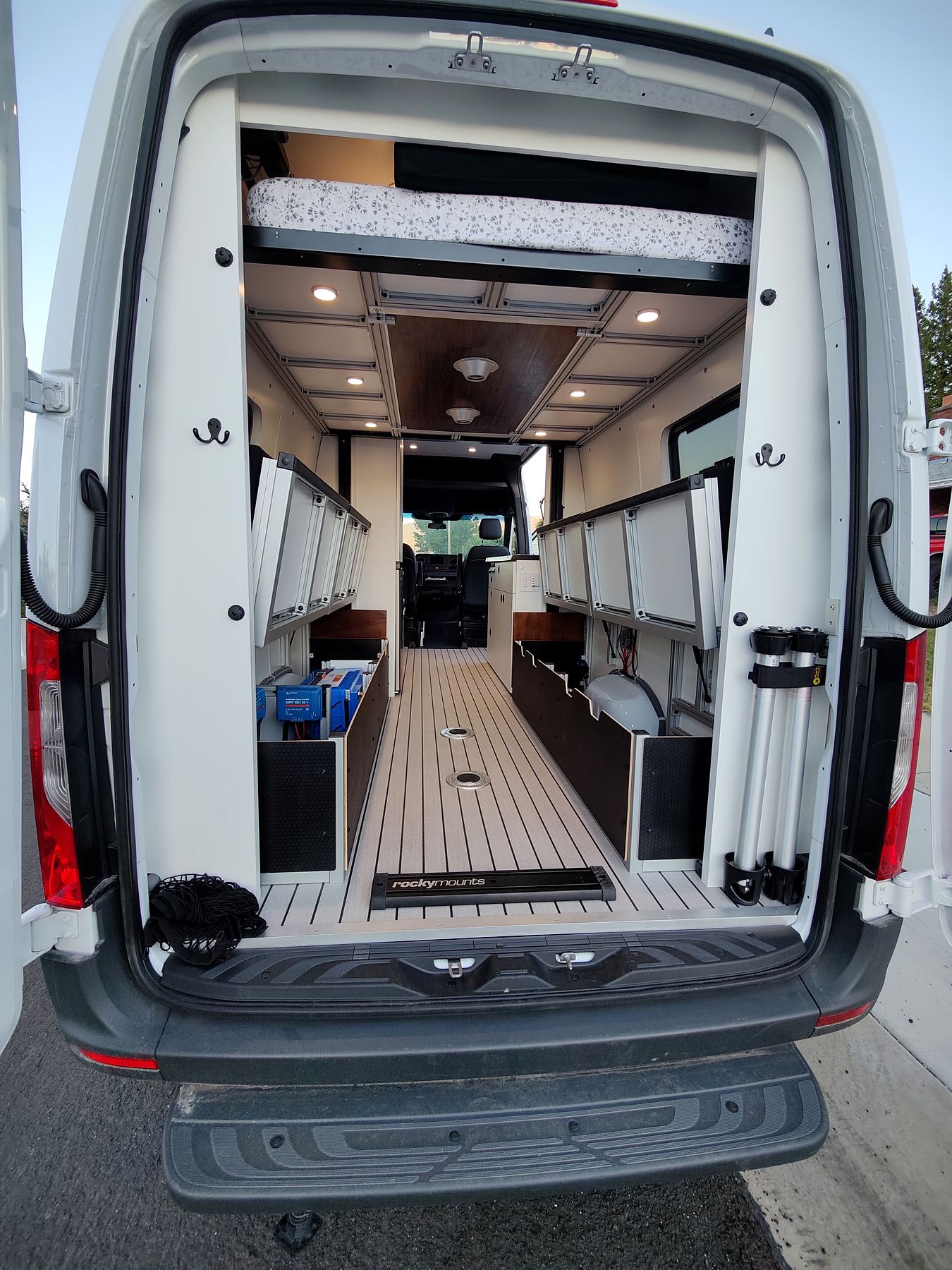
The floor is the foundation of a build: cabinets, beds, seats and battery boxes all fasten to it. We lay a plywood subfloor templated to the van and secure it through the factory tie-down points and rivnuts, then the finish floor goes on top. We've built floors in marine-grade plywood, used black phenolic "hexa" ply where a tough, waterproof surface matters, and replaced damaged floor sections in other builders' vans.
For the finish floor we recommend marine vinyl. It's made for boat decks, so it goes down as one glued, seamless sheet that water, snow and sand can't get under. It's thin, so it saves headroom, the wear layer shrugs off boots, dog claws and ski edges, and because it's glued rather than clicked together, it doesn't flex apart or squeak as the van twists and goes through Utah's temperature swings. LVP looks great and we install it too, but its click joints are made for houses that sit still.
Section through a finished floor. A plywood subfloor is fastened through the factory tie-down points and rivnuts, the finish floor goes on top, and any L-track sits flush and bolts through to structure.
- 1Marine vinyl one glued, seamless sheet (or LVP)
- 2Plywood subfloor marine, Baltic birch or phenolic ply
- 3L-track flush, bolted through to structure
- 4Fastened at factory points tie-downs and rivnuts
- 5Factory cargo floor lines underneath mapped first
Marine vinyl vs LVP
| Marine vinyl (recommended) | LVP (luxury vinyl plank) | |
|---|---|---|
| Install | One sheet, glued down | Click-together planks, floated or glued |
| Water | Waterproof, no seams for water to get under | Waterproof planks, but water can reach the subfloor at seams and edges |
| Durability | Marine wear layer for boots, claws and gear | Good, can chip or dent at plank edges |
| Van movement | Flexes with the van, nothing to separate | Joints can flex, gap or squeak |
| Thickness | About 2 mm, saves headroom | Thicker, plus underlayment |
| Look | Wood-look and solid designs | Very realistic wood looks |
| Cleaning | Wipe or mop, nothing to trap grit | Easy, but grit collects in joints |
Subfloors: Baltic birch is lightest, marine ply and phenolic-coated ply resist water best.
How we do it
Prep
Factory floor cleaned, tie-down points located, and lines under the floor mapped before drilling.
Subfloor
Plywood templated to the van, cut and fastened through factory points and rivnuts.
L-track
Routed in flush where needed and bolted through to structure.
Finish floor
Marine vinyl glued down as one sheet, or LVP laid, with edges sealed.
Trim
Edges, wheel wells and transitions trimmed clean.
Questions about flooring
Why marine vinyl over LVP?
It's one glued, seamless sheet, so water can't get under it and nothing separates as the van flexes. It's thinner and tougher too. LVP looks great but its click joints are built for houses.
Phenolic or Baltic birch subfloor?
Phenolic resists water best. Baltic birch is lighter and works well under a sealed marine vinyl floor.
Can I keep my factory tie-downs?
Usually yes, by reusing the anchors through the subfloor or switching to flush L-track.
Can you replace a damaged floor?
Yes. We've replaced floor sections in vans built by other shops.
Get a flooring quote
Send a few details and we will call you back with ideas, options and a ballpark.
- 6771 Emigration Canyon Rd, Salt Lake City
Office visits by appointment - 5.0 on Google from 39 reviews
Read what owners say