Van insulation and sound deadening
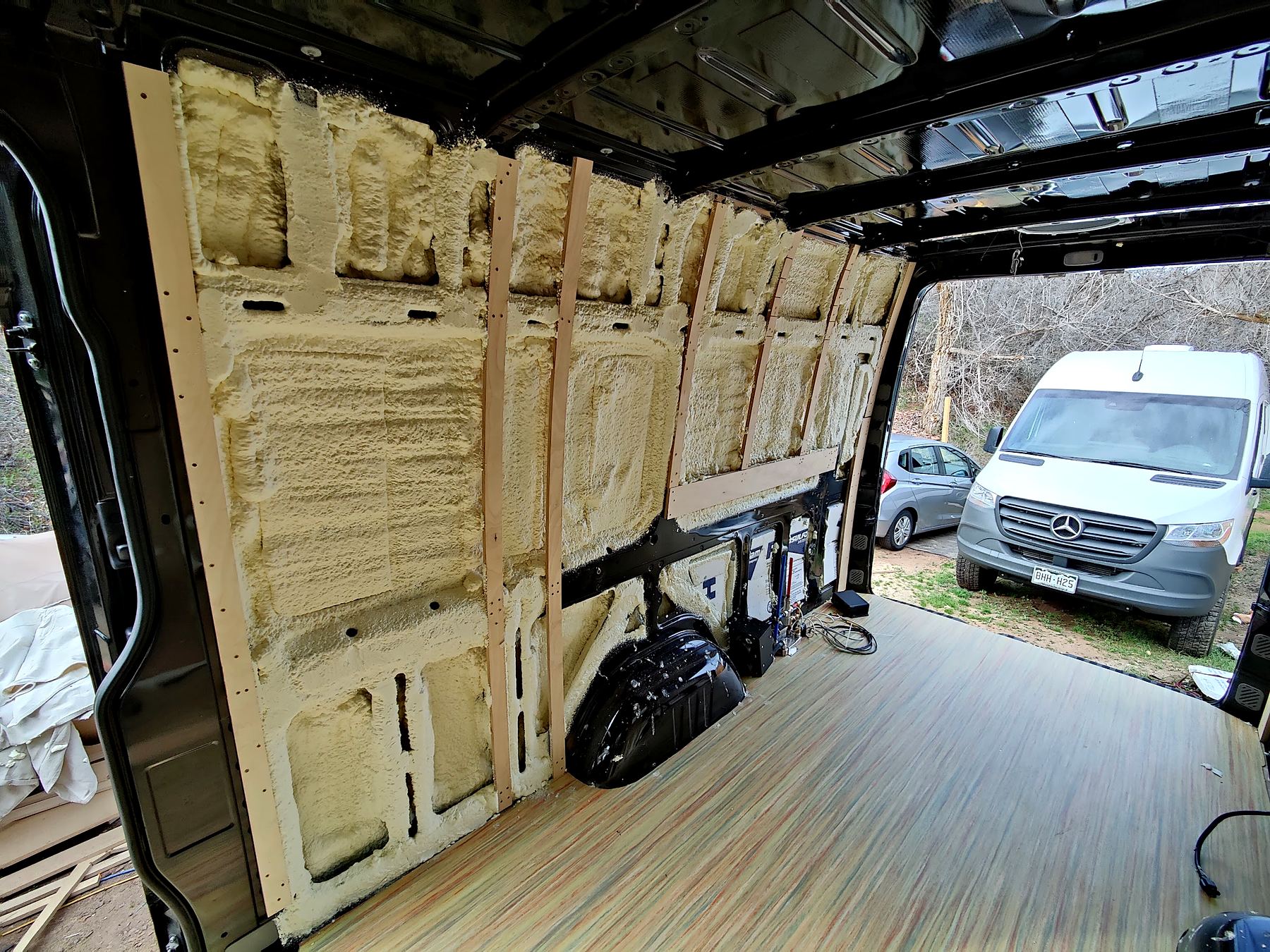
We mostly insulate with 3M Thinsulate, and also install closed-cell spray foam and Havelock wool. Every cavity filled, steel ribs covered, butyl where panels drum.
Warm in January, livable in July
Insulation is what makes a van comfortable from a ski lot in Park City to a trailhead in Moab, and it's the one part of a build you can't easily redo once the walls are up. The goal isn't the biggest R-value on paper. It's filling every cavity without gaps and managing the moisture you breathe and cook.
Our standard is 3M Thinsulate: light, moisture-tolerant, easy to pack into ribs and pillars, and the best sound absorber of the three. We also install closed-cell spray foam when maximum R-value per inch matters most, and Havelock wool for customers who want a natural fiber that buffers humidity. Windows and the cab lose the most heat, so insulated window covers and a cab curtain are part of the plan too.
Thinsulate vs closed-cell foam vs Havelock wool
| 3M Thinsulate (our standard) | Closed-cell spray foam | Havelock wool | |
|---|---|---|---|
| R-value | About R5.2 at about 1.65 in (SM600L) | About R6 per inch, highest | R3.6 per inch (batts) |
| Weight | Lightest | Light | Heaviest of the three |
| Moisture | Hydrophobic fibers, won't hold water | Air-seals and acts as a vapor retarder | Absorbs and releases humidity |
| Sound | Excellent absorber | Good, adds panel stiffness | Good absorber |
| Fills ribs and pillars | Easy to stuff and pack | Expands into every gap | Easy to pack, loose fill available |
| Rework later | Easy to pull and reinstall | Very hard to remove | Easy to pull and reinstall |
| Watch out for | Lower R per inch than foam | Needs careful application so panels don't distort | More weight, higher cost |
R-values are manufacturer or DOE figures. Whole-van warmth depends more on gaps, ribs and windows than on the number on the package.
How we do it
Prep the shell
Clean the metal, treat any rust and seal holes before anything goes in.
Sound deadening
Butyl mats at the center of large panels, about 25% coverage, to stop drumming.
Fill walls and ceiling
Thinsulate, foam or wool fills every cavity without gaps.
Ribs and pillars
Stuffed or covered so the steel doesn't bridge cold inside.
Close it up
Furring strips and panels, with access left where wiring needs it.
What matters most
Windows and cab
The biggest heat losses. Insulated covers and a cab curtain often beat adding thickness.
Moisture
Breathing and cooking add water. Ventilation and dry heat prevent condensation behind panels.
Weight and headroom
Every inch of insulation comes out of headroom and payload. We balance both.
Questions about insulation
What do you usually use?
3M Thinsulate. It's light, moisture-tolerant and a great sound absorber. We also install closed-cell foam and Havelock wool when they suit the build better.
When is closed-cell foam the better choice?
When you want the most R-value in the least depth and don't expect to open the walls again. It needs careful application so thin body panels don't distort.
Do I need a vapor barrier?
Most experienced builders say no. Moisture-tolerant insulation, ventilation and dry heat work better in a van.
Can you insulate a van that's partly built?
Yes, wherever walls and ceiling are still open.
Get an insulation quote
Send a few details and we will call you back with ideas, options and a ballpark.
- 6771 Emigration Canyon Rd, Salt Lake City
Office visits by appointment - 5.0 on Google from 39 reviews
Read what owners say